

If you live in Garland, TX, hard water is likely something you deal with every day. Homes throughout the city, from the neighborhoods near Duck Creek to the communities along Buckingham Road, are supplied with water sourced from Lake Lavon and Lake Ray Hubbard. By the time that water reaches your fixtures, it has picked up a significant load of dissolved calcium and magnesium, earning Garland a hardness rating of around 9.2 grains per gallon. That puts it squarely in the “hard” category according to the U.S. Geological Survey’s water hardness classifications, and the effects show up throughout your home in ways that are hard to ignore.
A water softener installation could be the solution your home needs, but choosing the right system and keeping it properly maintained requires more than a quick product search. Understanding how hard water behaves, what a softener actually does, and when to call a professional makes all the difference in protecting your plumbing investment long-term.
Understanding Hard Water and Its Effects on Your Home
When you notice limescale buildup on your faucets, cloudy residue on your dishes, or a persistent white crust forming around your showerhead, those are classic signs that hard water is working against your home’s plumbing system. Hard water carries elevated concentrations of calcium and magnesium minerals, and as it moves through your pipes and fixtures, it leaves those minerals behind.
In our service calls throughout Garland, we see the downstream effects regularly. Appliances like dishwashers and water heaters accumulate mineral deposits over time, forcing them to work harder and consume more energy. Soap and shampoo don’t lather as readily in hard water, which leaves residue on surfaces, dishes, and skin. Laundry can come out feeling stiff or looking dull, and fabrics tend to wear out more quickly than they should.
The most serious concern, from a plumbing standpoint, is scale buildup inside pipes. Over years of mineral accumulation, pipe interiors can narrow considerably, reducing water pressure and increasing the likelihood of blockages or failures. Addressing hard water early, rather than waiting for visible damage, is always the more cost-effective approach.
Benefits of Installing a Water Softener
Working in homes across Garland, we’ve seen firsthand how much of a difference a properly installed water softener can make. The improvements tend to show up quickly and across multiple areas of the home at once.
Homeowners most commonly notice:
- Softer skin and hair after showering, with the dry, itchy feeling that hard water causes largely eliminated
- Cleaner laundry that comes out brighter and holds up better over time
- Reduced scale buildup on fixtures, inside pipes, and within appliances
- Longer appliance lifespans for water heaters, dishwashers, and washing machines
- Lower energy bills, since appliances don’t have to work as hard to heat or move softened water
- Better soap and detergent performance, meaning you use less product and get better results
Beyond the comfort benefits, the plumbing protection aspect is significant. Mineral deposits are one of the leading causes of premature water heater failure in North Texas, and a softener can meaningfully extend the life of that equipment. Pairing a water softener with a tankless water heater installation is a combination that maximizes both efficiency and equipment longevity.
Different Types of Water Softeners Available
Not every water softener works the same way, and the right choice depends on your household’s water usage, space constraints, and priorities. Here is a breakdown of the most common systems:
Salt-Based Water Softeners
The most widely used and effective option. These systems use an ion exchange process, replacing calcium and magnesium ions with sodium ions. They require periodic replenishment with softener salt, but they deliver consistent results and are well-suited to Garland’s hardness levels.
Salt-Free Water Conditioners
These systems don’t remove hard minerals from the water, but they alter the structure of mineral particles so they’re less likely to form scale deposits. They require less maintenance and are considered a more eco-friendly option, though they’re generally less effective than salt-based systems in areas with significant hardness like Garland.
Dual-Tank Water Softeners
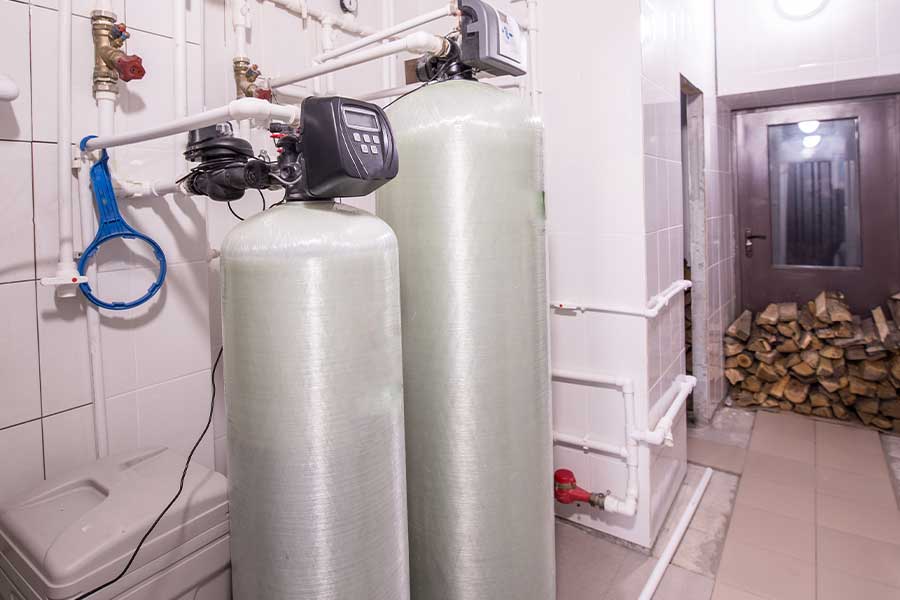
Dual-tank systems use two resin tanks that alternate during the regeneration cycle. This ensures a continuous supply of softened water without any interruption, which is a practical choice for larger households with high daily water demand.
Portable Water Softeners
Compact units designed for RVs, smaller residences, or temporary applications. These aren’t typically the right fit for a full home but serve a practical purpose in specific situations.
Each system has its place, and the decision involves more than comparing price tags. A professional assessment of your home’s water usage, pipe condition, and existing appliances helps ensure the system you install actually addresses your specific situation.
Signs That Indicate You Need a Water Softener
Based on what we see in Garland properties, the signs of hard water are consistent across the city, whether you’re in an older home near downtown Garland or a newer build in one of the communities off President George Bush Turnpike.
Watch for these indicators that hard water is affecting your home:
- Mineral deposits and limescale forming on faucets, showerheads, and fixture surfaces
- Soap scum buildup in bathtubs and showers that’s difficult to fully remove
- Spots on dishes and glassware after running the dishwasher
- Stiff, discolored laundry that doesn’t fully soften even with fabric softener
- Dry, itchy skin or dull hair after showering
- Reduced water pressure, which can indicate mineral buildup narrowing your pipes
- Frequent appliance issues, particularly with your water heater or dishwasher
- A metallic or mineral taste in your tap water
If your water heater is struggling or failing ahead of its expected lifespan, hard water scale is often a contributing factor. A professional evaluation, including a water heater repair assessment, can help determine whether the equipment itself needs attention alongside a softener installation.
Maintenance Requirements for Your Water Softener
A water softener is a mechanical system with a working resin bed, a brine tank, and control valve components, all of which require periodic attention to keep the unit performing properly. Understanding the general maintenance requirements helps homeowners know what to expect and when to bring in professional support.
Salt Levels
Salt-based softeners need regular salt replenishment to continue the ion exchange process. Allowing salt levels to drop too low causes the resin bed to become saturated with hardness minerals, which reduces softening effectiveness. Checking salt levels monthly and refilling before the tank drops below the halfway mark is standard practice.
Salt Bridges
Occasionally, salt can form a hardened crust in the brine tank, called a salt bridge, which creates an air gap between the salt and the water below. When this happens, the system behaves as if it has salt while actually failing to produce brine. Breaking up salt bridges is a straightforward fix, but it requires recognizing when it’s occurred.
Resin Bed and Brine Tank Cleaning
Over time, iron, sediment, and organic material can accumulate in the resin bed and reduce its efficiency. Periodic cleaning with a resin cleaner helps maintain ion exchange performance. The brine tank should also be cleaned out every year or two to prevent sediment buildup at the bottom.
System Inspections
Checking for leaks, unusual sounds, or changes in water quality every six months gives you an early warning before minor issues become significant repairs. Water softeners that are under-maintained eventually allow hard water to pass through, which means the damage to pipes and appliances resumes without the homeowner necessarily noticing right away.
If your water quality has changed, your water softener seems to be running longer cycles than usual, or you’re noticing hard water symptoms returning, those are signals worth having a professional evaluate. Issues like hidden leaks or supply line pressure problems can also affect softener performance, so a broader water leak detection and repair assessment may be appropriate alongside softener service.
Protecting Your Garland Home with the Right Water Treatment
Hard water is a reality for homeowners throughout Garland, and the mineral content in the city’s water supply isn’t going away. What you can control is how well your home is equipped to handle it. A properly selected and maintained water softener protects your pipes, extends the life of your appliances, reduces your energy costs, and improves everyday comfort throughout your home.
At Dean’s Plumbing, our team has helped homeowners across Garland understand their water quality challenges and find solutions that hold up over time. If you’re noticing hard water symptoms or want a professional evaluation of your current setup, we’re here to help. Contact our team today to schedule a consultation and find out what the right water treatment solution looks like for your home.